Stages in Software Development
In the dynamic realm of software development, navigating through various Stages in Software Development is essential for crafting exceptional digital solutions. From inception to deployment and beyond, understanding these pivotal stages ensures smooth project progression and successful outcomes. In this comprehensive guide, we’ll delve into each Stage in Software Development, unveiling key concepts, methodologies, and best practices.
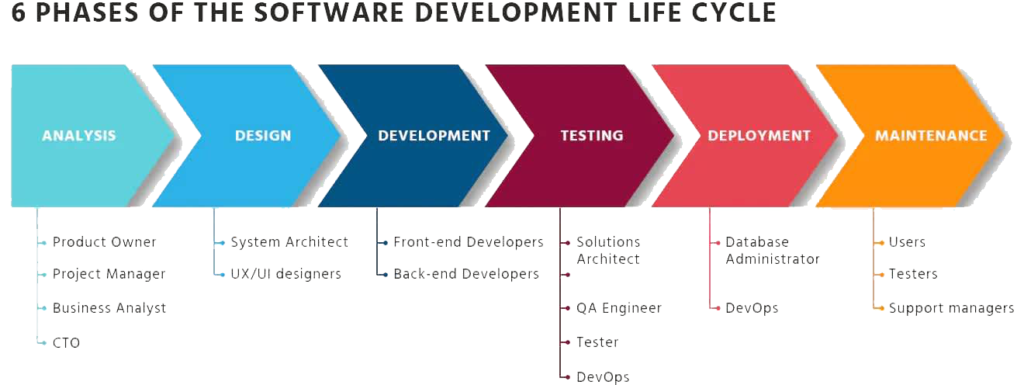
1. Requirement Gathering and Analysis:
The journey of software development embarks with comprehensive requirement gathering and analysis. Stakeholders’ needs are meticulously scrutinized, ensuring a profound understanding of project objectives. Techniques such as interviews, surveys, and workshops facilitate robust requirement elicitation, fostering collaboration among stakeholders. Utilizing tools like user stories, use cases, and personas aids in encapsulating user requirements effectively. Continuous refinement and validation of requirements throughout the project lifecycle ensure alignment with evolving business needs.
2. Planning:
Efficient project planning serves as the bedrock of successful software development endeavors. A meticulously crafted plan delineates tasks, timelines, and resource allocation, laying the groundwork for project execution. Techniques like Work Breakdown Structure (WBS) and Gantt charts facilitate task decomposition and scheduling, ensuring project milestones are met. Agile methodologies advocate for adaptive planning, emphasizing flexibility and responsiveness to changing requirements. Regular project reviews and retrospectives foster continuous improvement, enhancing project efficiency and team collaboration.
3. Design:
The design phase of Stages in Software Development encompasses translating requirements into robust architectural designs and intuitive user interfaces. Architectural patterns such as Model-View-Controller (MVC) and Microservices facilitate scalable and maintainable software architectures. User experience (UX) design principles guide the creation of intuitive and user-centric interfaces, enhancing user satisfaction and engagement. Prototyping tools like Sketch and Adobe XD enable rapid iteration and validation of design concepts, fostering stakeholder buy-in and minimizing rework.
7. Maintenance and Support:
Beyond deployment, software maintenance and support are essential for ensuring optimal performance and user satisfaction. Regular updates, patches, and feature releases cater to evolving user needs, addressing issues and enhancing software functionality. Utilizing issue tracking and service desk tools facilitates efficient incident management and customer support, ensuring timely resolution of user queries and concerns. Performance monitoring and optimization activities identify and mitigate performance bottlenecks, ensuring smooth operation of the software in production environments.
Throughout the software development journey, embracing iterative methodologies such as Agile or DevOps fosters continuous improvement and rapid value delivery. These stages in software development synergistically propel software projects towards success, navigating complexities with finesse.
As we navigate through the diverse stages in software development, each phase unfolds unique challenges and opportunities. By embracing best practices and fostering collaboration, software development endeavors are poised for triumph.